19th-Century French Novels Influenced Early Film and Comic Books by Alex Grand

At the close of the 19th century, films appeared as if by magic, illuminating screens with moving images that gave directors an apparent power over reality. In December 1895, the world looked agog as the Lumière brothers offered France’s first paying public screen exhibition. Within a year the flamboyant Georges Méliès was transporting audiences not to Paris but into fantastical settings bursting with effects undreamed of. Over the next ten years, film studios sprang up, flanked by the emergence of that now familiar, more modest visual sequential medium known as the comic strip. Both media needed stories, and they happened to find them already stacked on their own desks. In the United States most 19th century French novels already belonged to everyone, so their stories were readily available, and no rights had to be bought. It was a business too ripe with opportunity not to be seized upon.

French fiction tended to focus on outsiders, masked men, the underdog and the subversion of oppressive social structures. Many of the most important French novels had first appeared in newspaper installments that ended in suspense. Silent cinema took the same course, and later so did the adventure comic strip after its invention. The appeal was strong for millions who watched these multilayered and allegorical tales, where all passion and every thought were transmitted through written titles.
Sound had a shattering effect on all this.

Sam, one of the four Warner brothers (Harry was president), had been the force behind sound technology and the development of the Vitaphone at Warner Bros. He died the day before The Jazz Singer premiered in October 1927. As sound entered its high adolescence the Hollywood studios began turning out their more “serious” France-based melodramas. Warner Bros. made The Life of Emile Zola (1937). At MGM, Irving Thalberg steered the studio through the early years of sound and oversaw Camille (1936). George Waggner produced Phantom of the Opera for Universal in 1943. Among the bunch, Victor Hugo was the most widely adapted. He had written The Hunchback of Notre Dame in 1831, the pitiful tale of Quasimodo, misshapen in many ways yet serving faithfully as the bell ringer of Notre Dame de Paris, and Esmeralda the Romani, a dancer and an object of desire for a priest and more. He followed it with his other bestseller in 1862, Les Misérables, an epic saga about ex-convict Jean Valjean and Inspector Javert in relentless pursuit.

Both works, of course, found early Hollywood applications. Les Misérables was made by Vitagraph as a three-part silent film in 1909. Universal took on The Hunchback of Notre Dame as a feature in 1923, with Carl Laemmle producing and Irving G. Thalberg supervising. Laemmle saw in the mixture of sorrow and passion the ideal formula, and he paid nothing to the author’s estate for it. Lon Chaney, the man of a thousand faces, designed his own Quasimodo. He padded his body, added the signature hump and molded his own features between brute and sensitive human. The Hunchback role elevated Chaney into Hollywood’s most popular horror star and initiated a legendary run of Universal Gothic films.

Once talkies became a part of filmmaking, Darryl F. Zanuck of Twentieth Century Pictures funded an elaborate 1935 version of Les Misérables, most notorious for the clashes between Charles Laughton’s stone-faced Javert and Fredric March’s emotionally distraught Valjean. This film set the template for American movie translations. In 1939 at RKO, executive producer Pandro S. Berman released a sound version of The Hunchback of Notre Dame, complete with distinctively booming bell sound. The movie is typically singled out for Laughton’s tender and sorrowful performance as Quasimodo and Maureen O’Hara’s breakthrough role as the heartbroken Esmeralda.

There are two well-known and exciting novels by Alexandre Dumas featuring brave, rebellious swordsmen whose lives have been disrupted by betrayal and who seek revenge. Both The Three Musketeers and The Count of Monte Cristo had their debuts in 1844 to 1846 as newspaper serials. The three most iconic musketeers, Athos, Porthos and Aramis, join forces with the naive but ambitious d’Artagnan to defend the queen against the scheming Cardinal Richelieu. In 1921, United Artists released a silent version featuring Douglas Fairbanks in action. Fairbanks came back to d’Artagnan for his final silent swashbuckler, The Iron Mask (1929), adapted from the concluding portion of Dumas’ The Vicomte de Bragelonne, where the king’s twin is imprisoned behind a riveted iron mask. In 1935, RKO offered a talkie accompanied by Max Steiner’s upbeat score, complete with clearer sound effects, more vivid hoofbeats and the clash of steel, as well as witty banter. Following that, 20th Century Fox produced its version in 1939 and added music and the comic talent of the Ritz Brothers. The same year James Whale directed The Man in the Iron Mask for United Artists, with Louis Hayward in the dual role and the iron mask itself.

The Count of Monte Cristo tells of a falsely accused sailor who escapes prison and reappears as a wealthy count seeking to destroy those who betrayed him. Fox filmed it as a silent in 1922, the year after the Fairbanks Three Musketeers, with opulent costumes and an expansive adventure. The next film version was a 1934 talkie produced by Edward Small for United Artists. It brought Dumas’ novel to the screen for the first time as an English-language sound production, uniting a strong performance from Robert Donat with a sophisticated score by Alfred Newman.

Jules Verne took his fans far from swashbuckling adventures into a new frontier for the fantastic. In Journey to the Center of the Earth (1864), a professor, his nephew and their guide went down an Icelandic volcano into a prehistoric underworld and found adventure. Twenty Thousand Leagues Under the Sea (1870) told of three unlucky men trapped on Captain Nemo’s deadly underwater craft, the Nautilus. Within its awesome depths they beheld nature’s treasures, and they were drawn into Nemo’s war against the warships of a nation Verne never names.

Technology limited most early science-fiction films, but in 1916 Universal’s Carl Laemmle took on Verne’s sea tale with ambitious filming of underwater scenes using a submersible device called a photosphere. The Williamson brothers filmed from the sphere, lowered from a ship by a flexible hose. A thick glass plate gave the camera a view of the sea while keeping it dry inside. Audiences delighted in it, but it would be nearly forty years before either of these two Verne novels appeared again on film.

Émile Zola was a French novelist and exponent of social criticism. He wrote such well received works as Germinal (1885), the tale of a French coal miners’ strike, and the darker La Bête humaine (1890), an exploration of the fatal impulses and jealousies within the French railroad worker community. Since a good deal of his work was in the public domain in the US, filmmakers interested in social issues produced screen adaptations. American studios were enamored of his work across the board. Now lost, Fox Film’s Destruction (1915), directed by Will S. Davis and starring Theda Bara, was modeled after Zola’s Travail (1901), in which a reform-minded engineer transforms a steel mill into a workers’ utopia. D. W. Griffith’s The Struggle (1931) for United Artists is a bleak portrait of alcoholism echoing Zola’s L’Assommoir (1877). Nana (1934), a Samuel Goldwyn film for United Artists directed by Dorothy Arzner, adapts Zola’s 1880 novel about an actress who becomes a high-society courtesan, wrecking wealthy men with the same pleasures they denigrate publicly.

Warner Bros.’ The Life of Emile Zola (1937), a Best Picture winner, centers on Zola’s participation in exonerating Alfred Dreyfus of a false charge of espionage. Columbia’s Human Desire (1954), directed by Fritz Lang with Glenn Ford and Gloria Grahame, reconceives La Bête humaine as an American film noir about a railroad engineer enticed into murder. In U.S. adaptations, Zola’s pro-worker, social-reform bent usually got softened, and personal melodrama moved center stage.

During the 1830s and ’40s, Honoré de Balzac labored on a massive project: a vast series of dozens of interwoven novels, which he collected under the title La Comédie humaine in 1842, envisioning them as a total portrait of the human world. Greedy schemes and desperate ambitions permeated his connected novels with their cast of returning characters.

Filmmakers were quick to tap into his output, even in the silent era. Rex Ingram’s The Conquering Power (1921), a Metro Pictures picture starring Rudolph Valentino, came from Eugénie Grandet (1833), concerning a miser’s daughter whose first love is crushed by her father’s avarice. Norma Talmadge starred in the First National version of La Duchesse de Langeais (1834), released as The Eternal Flame (1922), the tale of a Parisian duchess who retreats to a convent after a devoted general finally stops seeking her attentions. With the advent of sound, many of these figures gained a lively presence through the new medium’s focus on the spoken word. The Lovable Cheat (1949), a breezy Skyline film adapted from Balzac’s 1851 stage play Mercadet, satirizes a hopelessly indebted Paris speculator who duplicitously satisfies his creditors, showcasing the cutthroat morality of boom and bust.

Guy de Maupassant’s short stories dissected the hypocrisy of the bourgeoisie, and they had the right kind of scale for one-reel silent pictures and shorts during the early talkie years. In Boule de Suif (1880) stagecoach passengers force a patriotic prostitute to sleep with a Prussian officer in exchange for safe passage and then shun her. The Woman Disputed (1928), a late silent with Norma Talmadge released with sync music and effects, revamped the story. RKO’s Mademoiselle Fifi (1944), directed by Robert Wise, combined Boule de Suif with the 1882 Maupassant short Mademoiselle Fifi, in which a local woman, as an act of defiance in miniature, stabs a tyrannical Prussian lieutenant.

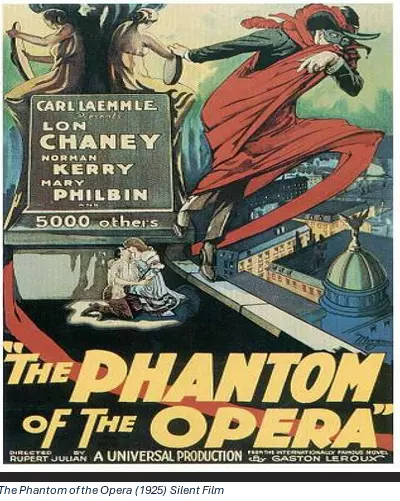
Gaston Leroux published Le Fantôme de l’Opéra in the Paris daily Le Gaulois as a serial in 1909 and 1910, with the book following in 1910. It concerns a disfigured musical prodigy living in a hidden part of the opera cellars. He tutors a gifted and alluring soprano, tries to sabotage her romance with another man, and meets his own end in a burst of jealousy and fury. Fifteen years later Universal came up with The Phantom of the Opera (1925), a popular Carl Laemmle production helmed by Rupert Julian and starring Lon Chaney. His makeup design, along with a two-color Technicolor masked ball scene, made it a sensation. Universal released an updated version with sync music and effects and added footage in 1929. The 1943 remake by Arthur Lubin, with Claude Rains in the title role, won Oscars for its color photography and art direction and took the material more in the mode of operatic romance than gothic horror.

French novels were being plundered for cinematic plots, just as the same material was percolating into a new kind of American narrative: the newspaper strip. Cartoon strips, taking hold with novelty gags in the 1890s, had by the 1920s and ’30s lengthened into serial adventure to suit the American taste. Alex Raymond’s Flash Gordon, a science-fantasy adventure with ray gun battles and sword fights on the planet Mongo, was a January 1934 King Features success, a clear product of the kind of Dumas- and Verne-inspired cinema Hollywood had churned out for two decades. Around the same time, Eastern Color Printing was publishing anthology “funny books” of reprinted strips, including Famous Funnies (1934).

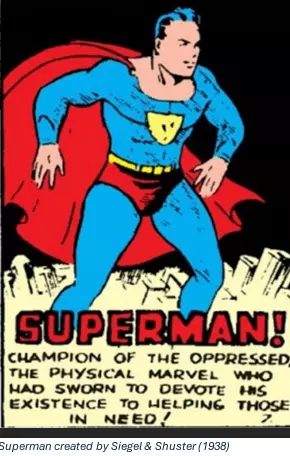
On this foundation Major Malcolm Wheeler-Nicholson founded National Allied Publications and published the first comic book of original material to become readily available at the newsstand, New Fun (1935). New Fun #6 (October 1935) presented an early example of the sword-fight appeal of the historical adventure tradition: the French swordsman Henri Duval, created by Jerry Siegel and Joe Shuster three years before Superman. The same issue also introduced their occult investigator, Dr. Occult. The tradition lives on through these characters. Shuster revealed that Superman’s imposing stance and presence had taken a cue from Douglas Fairbanks, the d’Artagnan of the 1921 Musketeers, and Superman in Action Comics #1 (1938) appears in disguise and fights corrupt officials in a system rigged against innocent people. In short, it is the Dumas narrative without the swords. Upon Doctor Doom’s creation in Fantastic Four #5 (1962) Jack Kirby thought of him as the man in the iron mask and a harbinger of death and that the mask was directly responsible for the armor and hood. The riveted iron face Whale introduced on the big screen back in 1939, had become the face of Marvel’s greatest antagonist.
Meanwhile the pulp mags were taking on dark, sordid themes, and the films carried similarly grim moods. The Shadow resulted from this fusion. He was first heard over the radio in 1930, announced as host for murder mysteries. In 1931 Street & Smith launched The Shadow Magazine, written by Walter B. Gibson under the name Maxwell Grant. The pulp character was presented with stark visuals worthy of The Phantom of the Opera: sharp light and shadow, dark shadowed eyes, and a cape. He expressed the kind of hostile obsession with corrupt systems present in The Count of Monte Cristo, and like Jean Valjean his existence as a fugitive with secret motivations recalled the other great novels’ masked outsiders battling oppressive society. There is no evidence of a direct link to the books here either, but Gibson and his readers shared the experience of seeing all these movies. Batman provides a well-documented, clear descendant of the masked hero. Bob Kane cited Fairbanks’ Zorro as inspiration for the character, and the Batman of Detective Comics #27 (1939) derives from Johnston McCulley’s 1919 Zorro. McCulley in turn drew on the Dumas and Hugo tradition of the secret outsider in a mask battling corrupt officials.

French novels had inspired the scripts of silent and early sound-era filmmakers. The films in turn fed the American newspaper strip and the pulp magazine. By 1939 the mythic archetype of the outcast seeking adventure and battling injustice, from Dumas, Hugo, Zola, Maupassant and Leroux, had moved on and taken on many new, modern guises from Superman to Batman and beyond.

Join us for more discussion at our Facebook group

check out our CBH documentary videos on our CBH Youtube Channel

get some historic comic book shirts, pillows, etc at CBH Merchandise

check out our CBH Podcast available on Apple Podcasts, Google PlayerFM and Stitcher.

Use of images are not intended to infringe on copyright, but merely used for academic purpose.

Images used ©Their Respective Copyright Holders

×
Add New
Why Did the Comic Book Superheroes Outlast the Pulp and Comic Strip Heroes? By Alex GrandSeptember 11, 202619th-Century French Novels Influenced Early Film and Comic Books by Alex GrandSeptember 1, 2026Joshua Sky Biographical InterviewAugust 5, 2026Ancient Evil, Holocaust Trauma, and the Fortress: How “The Keep” Anticipated the X-Men by Alex GrandJune 1, 2026Understanding Superhero Comic Books Editorial ReviewsMay 18, 2026The Mark of Heartbreak: Legends of the Dark Knight’s “Blades” By Anthony M. CaroFebruary 27, 2026‘The Phantom – The Lee Falk Version’ Part Two (1970 – 1999) —- by Rosco M (Amended)January 6, 2026 (draft)Wolverine’s First Bar Fight by Alex GrandDecember 10, 20251993 James Cameron Spider-Man film ScripmentOctober 9, 2025Ed Gein: From Newspapers to Comics and Film by Alex GrandOctober 6, 2025Marvel Method: Reconciling the Accounts of Jack Kirby and Stan Lee by Rosco MAugust 20, 2025Spotlight on Frank Miller (Interviewed by Mark Evanier at Comic Con 2025)July 30, 2025Comic Books Have Gone Cultural by Stan Lee 1975June 30, 2025Scholastic Scope March 28, 1974 “Collecting Comics, A Serious Business”June 30, 2025Des Moines Register explaining why the paper is dropping Steve Canyon due to violent content, June 10, 1979June 30, 2025Letter from Fredric Wertham to Playboy Magazine, Feb. 1966, commenting on “The Great Comic Book Heroes” by Jules Feiffer from Oct. 1965 issueJune 29, 2025A Comic Book Historian’s Guide to the Diverse and Vital Interviews at Comic Book HistoriansFebruary 17, 2025Comic Book Historians: A Universe of Diverse StoriesFebruary 15, 2025Applause for the Klassic KISS/Marvel Comics Kollaboration by Anthony M. CaroFebruary 15, 2025The Comics Magazine Co.: A Review by Alex GrandJanuary 30, 2025Super-Folks (1977) review by Alex GrandJanuary 7, 2025Craig Yoe Biographical Interview by Alex GrandDecember 17, 2024Jim Starlin Biographical Interview by Alex GrandOctober 13, 2024Superheroes in Comics!!!October 10, 2024Rob Liefeld Biographical Interview by Alex GrandSeptember 26, 2024‘The Phantom – The Lee Falk Version’ Part Two (1970 – 1999) —- by Rosco MSeptember 16, 2024‘The Phantom – The Lee Falk Version’ Part One (1936 – 1969) —- by Rosco MSeptember 2, 2024Jim Steranko Biographical Interview by Alex GrandMay 17, 2024Steve Rude Biographical Interview by Alex Grand & Bill FieldMay 2, 2024Todd McFarlane Comics Origin Interview by Alex Grand & Mike AldermanMarch 25, 2024Lobo the first Black Superhero by John GoodrichMarch 21, 2024Daredevil and Black Widow Fight Villains and Bittersweet Feelings By Anthony M. CaroMarch 18, 2024Revisions to Ditko ArticleMarch 7, 2024 (draft)Dave Gibbons Biographical Interview by Alex Grand & Mike AldermanDecember 14, 2023Japanese World War II Comics for Peace? by Andy deLunaDecember 7, 2023Steve Ditko Biographical Interview with Pat & Patrick Ditko by Alex GrandDecember 1, 2023Roy Thomas Biographical Interview by Alex GrandNovember 30, 2023‘The Romita Version’ – Exploring John Romita’s Accounts of Spider-Man, Stan Lee and the Marvel Method (1966 – 1971) by Rosco MNovember 23, 2023Danny Fingeroth on Jack Ruby by Alex GrandNovember 23, 2023‘The Ditko Version’ – Exploring Steve Ditko’s Recollections of Marvel in the 1960s by Rosco MOctober 28, 2023Changes and Reflections in Green Arrow: The Longbow Hunters By Anthony M. CaroOctober 8, 2023Pre-history of Comics and Comix Co. by Bud Plant & Jim BuserAugust 28, 2023Harvey Kurtzman: Between the Lines by Alex GrandAugust 12, 2023Celebrate David Armstrong’s Interviews at SDCC panel: Video Profiles – Golden / Silver Age Creators SDCC 2023 PanelAugust 8, 2023The Entertainment Makers: Film & Comics by Alex GrandJuly 5, 2023Understanding Superhero Comic Books Interview with Alex Grand & N. Scott Robinson, Ph.D.June 28, 2023John Romita Obituary by Alex GrandJune 17, 2023Tom Palmer Obituary by Alex GrandMay 30, 2023José Villarrubia Biographical Interview by Alex GrandMay 20, 2023Al Williamson: Comics Illustrator by Alex GrandMay 19, 2023Lee Falk: Comics Strip Visionary by Alex GrandMay 14, 2023Roy Crane: Comics Genius by Alex GrandMay 14, 2023Stan Lee interviewed at Lucca in 1974 translated by Alex GrandApril 27, 2023Chris Claremont’s X-Men Further Humanized Superheroes by Alex GrandApril 23, 2023Dan Brereton Biographical Interview: Illustrator, Painter and Writer by Alex GrandFebruary 25, 2023Silent Partner: The Early Man-Thing Guest Appearances By Anthony M. CaroDecember 23, 2022Reading Alan Moore’s Thunderman by Alex GrandDecember 10, 2022Jesse Simon Interview on Joe Simon and ShieldMaster by Alex GrandNovember 29, 2022David Armstrong’s Amazing Golden Age Interviews remastered by Alex GrandOctober 20, 2022BBC Radio Show Today interviews Alex Grand and Zeb Wells for Spider-Man’s 60th AnniversaryAugust 11, 2022Larry Hama: The Early Years Interview by Alex GrandMay 30, 2022Alex Segura Interview: Comics Writer and Crime Novelist of Secret Identity by Alex GrandApril 14, 2022When Does One Villain Have Two First Appearances? The Golden and Silver Age Debuts of The Riddler By Anthony M. CaroMarch 3, 2022A Boy and His Dog on the Road to Hell: Lone Wolf and Cub #19 by Anthony M.CaroJanuary 17, 2022The Strange Death of Alex Raymond Review by Alex GrandJanuary 6, 2022Reprinting by Centaur Publications: Little Giant Comics By MICHAEL SANCHEZ & JEFF KEPLEYDecember 24, 20211966 Dracula Graphic Novel: Spotlight by Alex GrandNovember 22, 2021Journey into Mexico – Review by Javier HernandezNovember 22, 2021The Villain Who Would Be King: Remembering the Pre-Crisis Killer Croc by Anthony M. CaroNovember 15, 2021Jim Shooter Biographical Interview by Alex Grand & Jim ThompsonSeptember 30, 20212021 Ditko Convention Interviews by Alex GrandSeptember 18, 2021Bud Plant Biographical Interview with Bud Plant and Alex GrandSeptember 12, 2021The African Prince by Alex Grand & Guy Dorian Sr.September 3, 2021Jerry Ordway Power Hour Interview by Alex Grand & Filippo MarzoAugust 31, 2021Mort Todd Biographical Interview by Alex GrandAugust 30, 2021Stan Lee, co-creator of the Marvel Universe by Alex GrandAugust 26, 20211976 Stan Lee West Germany Interview Discovered!July 20, 2021Thor’s Holy War: The Crusader Takes a Swing by Anthony CaroJuly 10, 2021Who is Steve Ditko? with Mark Ditko & Alex GrandJune 17, 2021John A. Mozzer interviewed Hal Kinney in 1974May 25, 2021Monsters & Science Fiction Films Influenced Superheroes by Alex GrandApril 25, 2021Ken Quattro’s Invisible Men Interview by Alex Grand & Jim ThompsonFebruary 17, 2021Flying In and Out: Blackie Drago’s Short-Lived Vulture Career Offers Life Lessons By Anthony M. CaroJanuary 30, 2021Bungleton Green. “the oldest, longest continuously running black comic strip” by Steve CarperJanuary 13, 2021Tom Palmer, Inker & Illustrator Career Interview by Alex Grand & Jim ThompsonJanuary 2, 2021Why Superman Drunk Is A Ridiculous Concept By Matthew RizzutoDecember 10, 2020Happy 80th Birthday, Bugs Bunny!!! By Matthew RizzutoDecember 10, 2020Bob Hall, Comic Artist, Writer & Actor Vid Interview by Alex Grand & Jim ThompsonDecember 8, 2020Carol Tyler Eisner Winning Comic Writer & Artist Interview by Alex Grand & Jim ThompsonDecember 7, 2020The Comic Origin of the Flintstones by Alex GrandNovember 29, 2020Bill Watterson’s “Calvin and Hobbes” At 35 By Matthew RizzutoNovember 25, 2020Tarpe Mills 1940s Miss Fury Pioneered 1960s Superhero Storytelling by Alex GrandNovember 22, 2020Comic Books in 80s & 90s Video Games by Alex GrandNovember 22, 2020The Addams Family was a Single-Panel Comic First by Alex GrandNovember 22, 2020The Final Chapter Revisited Twice: Power Records and Marvel/Curtis’ Battle for the Planet of the Apes By Anthony M. CaroNovember 19, 2020Mike Baron, Eisner Winning Writer and Novelist Interview by Alex Grand & Jim ThompsonNovember 16, 2020Kim Munson Interview: Comic Art in Museums by Alex Grand & Jim ThompsonNovember 6, 2020Barbara Friedlander Interview by Alex Grand & Jim ThompsonOctober 28, 2020Professor William H. Foster III & African-Americans in Comics with Alex Grand & Jim ThompsonOctober 18, 2020Milton Caniff: Key Inspiration of Comic Books by Alex GrandOctober 16, 2020Lev Gleason American Daredevil Interview with Brett Dakin by Alex Grand & Jim ThompsonSeptember 28, 2020Transatlantic History Ramblings Interviews Alex Grand 2020September 20, 2020Jonny Harvey, Harvey Comics Legacy Interview with Alex Grand & Jim ThompsonSeptember 11, 20201968 & 1969: Interview’s with Stan Lee in Castle of Frankenstein and Cartoonist Profiles scanned by Alex GrandSeptember 10, 2020Vigilante Walks the Tormented Path to the Final End by Anthony CaroSeptember 10, 2020Tony Puryear, Hollywood and Comic Books Bio Interview by Alex Grand & Jim ThompsonSeptember 2, 2020Tom Brevoort, VP of Marvel Interview by Alex Grand & Jim ThompsonAugust 31, 2020Why is Harold Gray Important? by Alex GrandAugust 30, 2020Tom Fagan and the Rutland Parade 1970s by Alex GrandAugust 29, 2020Jack Keller, Western Artist 1973 Interview by John A. MozzerAugust 22, 2020John A. Mozzer Interviewed 5 of Steranko’s Associates in 1973August 19, 2020Visualizing Robert E. Howard’s “The Tower of the Elephant” in Conan the Barbarian #4 By Anthony CaroAugust 13, 2020Gary Groth Interview: Publisher & Comics Critic by Alex Grand & Jim ThompsonAugust 11, 2020Scott Shaw! Interview, King of Cartoons by Alex Grand & Jim ThompsonJuly 22, 2020Roy Thomas Marvel Age Interview by Alex Grand & Jim ThompsonJuly 21, 2020The 4 Magi of Comics by Alex GrandJuly 19, 2020Chuck Dixon Crime Comics Writer by Alex Grand & Jim ThompsonJuly 13, 2020Mary Fleener Interview, Queen of Comic Cubism by Alex Grand & Jim ThompsonJuly 3, 2020Two Spectacular Spider-Man Magazines from 1968 by Alex GrandJuly 3, 2020Jack Kirby Star God Trilogy: Thor, New Gods & Captain Victory by Alex GrandJune 20, 2020The Comics Magazine Company: 14 months of Comic Book History by Michael SanchezJune 13, 2020Peter Sanderson Interview: Comics’ Archivist by Alex Grand & Jim ThompsonJune 4, 2020Michelle Nolan discusses Secondary Superheroes of the Golden Age by Lou MouginMay 25, 2020William Stout Interview: Illustrator and Creative Architect by Alex Grand & Jim ThompsonMay 15, 2020Steve Geppi Interview: The Godfather of Comics by Alex Grand & Jim ThompsonMay 15, 2020Advancement of Storytelling and Legal Lessons in Platinum Age comic strips by Alex GrandMay 9, 2020Don McGregor Biographical Interview by Alex Grand & Jim ThompsonMay 3, 2020Chester Gould’s Dick Tracy and his 1930s Era War on Crime by Alex GrandApril 25, 2020Michael Dooley Interview: Adjunct Professor of Comics by Alex Grand & Jim ThompsonApril 23, 2020Ron Frenz Interview, Marvelous Comic Artist by Alex Grand & Jim ThompsonApril 1, 2020There are Two Stan Lee’s by Alex GrandMarch 28, 2020The Steranko Experience with Alex GrandMarch 23, 2020 (draft)Joe Staton Interview: Detective Comic Cartoonist by Alex Grand & Jim ThompsonMarch 15, 2020Erik Larsen Interview, Comic Book Maker by Alex Grand & Jim ThompsonFebruary 21, 2020Masters of the Universe Comics and Picture Books from the 1980s by Alex GrandFebruary 15, 2020Bob Camp & George Lowe Interviews, Maestro’s of Animation by Alex GrandJanuary 3, 2020CBH’s Alex Grand interviewed on the Calling Out Controversy Podcast 2019 about the Joker and the Comics CodeDecember 21, 2019David Anthony Kraft Interview, Rock N Roll Journalist, Writer, Publisher by Alex Grand & Jim ThompsonDecember 13, 2019Paul Levitz Interview: DC Comics Fan, Writer, Editor, Publisher, President by Alex Grand & Jim ThompsonDecember 3, 2019Hendrie Weisinger Interview: Son of Mort, Superman Developer and Editor by Alex Grand & Jim ThompsonNovember 24, 2019Carl Potts Interview: Editor, Artist, Professor by Alex Grand & Jim ThompsonNovember 7, 2019Tom DeFalco Interview, Consummate Professional by Alex Grand & Jim ThompsonOctober 21, 2019Jim Cheung Interview, Marvel and DC Comics Artist by Alex GrandSeptember 4, 2019Benton Jew Interview, Comic & Movie Storyboard Artist by Alex GrandSeptember 4, 2019Jimmie Robinson Interview, Creator of Bomb Queen by Alex GrandSeptember 4, 2019Whilce Portacio Interview, X-Factor & Image Comics Penciler by Alex GrandSeptember 4, 2019Anthony Tollin Interview, DC Comics Colorist & Pulp Historian by Alex GrandSeptember 4, 2019King Feature Syndicate – Hearst BullpenSeptember 2, 2019 (draft)British talkRADIO host Paul Ross interviews CBH’s Alex Grand about Marvel Comics 1000August 30, 2019Frank Thorne Interview, Wizard of the Comic Arts by Alex Grand & Jim ThompsonAugust 18, 2019Mark Chiarello Interview, The Art Director Behind the Curtain by Alex Grand & Jim ThompsonAugust 9, 201980 Years of Superman!!! By Matthew RizzutoJuly 21, 2019From Cannolis To Capes: Mario Puzo On Superman By Matthew RizzutoJuly 21, 2019What Killed Jerry Siegel’s Father? By Matthew RizzutoJuly 15, 2019Josef Rubinstein Interview, Comic Book Inker of All by Alex Grand & Jim ThompsonJune 28, 2019Danny Fingeroth Interview, Editor & Writer by Alex Grand & Jim ThompsonJune 28, 2019A Photo of The Great Steve Ditko from 2015June 12, 2019Comic Artist Jack Cole’s Suicide Note to Hugh Hefner 1958May 26, 2019Howard Chaykin, the Dark Prince of Comics with Alex Grand & Jim ThompsonMay 8, 2019Tim Sale Interview, the Gentleman’s Artist by Alex Grand & Jim ThompsonApril 13, 2019Spring-Heeled Jack: The Original Batman? by Alex GrandMarch 23, 2019Trina Robbins Interview, Superstar by Alex Grand & Jim ThompsonMarch 18, 2019Fleischer Studios Superman Cartoons By Matthew RizzutoJanuary 4, 2019Max Fleischer (1883–1972): Inventor, Cartoonist, Animation Pioneer By Matthew RizzutoJanuary 4, 201940 Years of Richard Donner’s Oscar®-Winning, Epic Masterpiece, “Superman: The Movie”!!! By Matthew RizzutoDecember 24, 2018Jack The King Kirby: Comic Creator By Matthew RizzutoDecember 24, 2018Ramblings About Harlan Ellison By Matthew RizzutoDecember 24, 2018Steve Ditko, Auteur By Matthew RizzutoDecember 9, 2018Thoughts On Stan Lee By Matthew RizzutoDecember 9, 2018Mike Royer Interview, Jack Kirby’s Favorite Inker by Alex GrandNovember 30, 2018Mark Texeira and Jimmy Palmiotti Interviews by Bill Field & Alex GrandNovember 21, 2018Ron Lim Interview, Cosmic Artist in 2018 by Alex Grand and Bill FieldNovember 21, 2018Chris Burnham Interview, Comic Artist by Alex Grand & Bill FieldNovember 21, 2018Larry Houston Interview, X-Men Cartoon Animator by Alex Grand & Bill FieldNovember 21, 2018Dan Parsons Interview, Fantasy Comic Artist by Alex Grand & Bill FieldNovember 21, 2018Rick Marschall Interview, Editor of the Marvel Magazine Line 1977-1980 by Alex Grand, Jim Thompson and Bill Field.August 25, 2018Tom Orzechowski Interview, Comic Letterer by Alex Grand, Bill Field & Jim ThompsonAugust 23, 2018Early 20th Century Classic Illustrators’ Intersection with Comic Books through the Ages by Alex GrandAugust 18, 2018SDCC2018 CAC Panel: Attorneys vs Historians: Who Authors The Authorship Narrative? with Alex Grand and Jim ThompsonAugust 5, 2018Neal Adams Interview, Balls of Steel by Alex Grand & Bill FieldAugust 5, 2018Joe Shuster’s Favorite “Ghost”: Wayne Boring!!! By Matthew RizzutoJune 20, 2018The Mysterious Circumstances Surrounding George Reeves’ Death By Matthew RizzutoJune 20, 2018The History of Cosmic Rays in Comic Books by Alex GrandMay 21, 2018EC-Comics: From Education Comics to Picto-Fiction by Alex GrandApril 30, 2018What did Siegel and Shuster do in Comics After Superman? by Alex GrandApril 30, 2018MacFadden & Houdini: Real Life Pre-Precursors to Superman & Batman by Alex GrandApril 26, 2018The Importance of Phillip Wylie to the Superhero Genre by Alex GrandApril 23, 2018What Are the Formative 20th Century Graphic Novels (1918-1983) ? by Alex GrandApril 20, 2018Born on Krypton, Created in Cleveland By Matthew RizzutoApril 19, 2018Before Krypton Exploded, There Was Slam Bradley By Matthew RizzutoApril 19, 2018The Deaths of the 20th Century Comic Book Greats by Alex GrandApril 18, 2018Eisner: The Man. The Myth. The Legend. The Storyteller. The Genius. By Matthew RizzutoApril 15, 2018THE SPECTRE AWAITS!!!! By Matthew RizzutoApril 15, 2018The Importance of Reed Crandall To Comic Book History by Alex GrandApril 5, 2018The History of Comics, Courtesy of Superman By Matthew RizzutoMarch 18, 2018What Happened to Key Golden Age Artists as the Silver Age Was Around the Corner by Alex GrandJanuary 16, 2018Jim Starlin: The Bringer of Death to Comic Book Characters by Alex GrandJanuary 14, 2018The Influence of Pulp Fiction on the Golden and Silver Age of Comic Books by Alex GrandJanuary 12, 2018Julius Schwartz – Co-Creator of the DC Universe by Alex GrandNovember 29, 2017Alan Moore’s Watchmen were based on Golden and Silver Age comic heroes by Alex GrandNovember 19, 2017Brief history of Ancient Aliens in Pop Culture & Comic Books (with Jack Kirby & Steve Ditko) by Alex GrandNovember 19, 2017Where does Superman come from? First Answer is … by Jim ThompsonOctober 16, 2017The Golden Age Movie Stars That Shaped the Face, Body and Look of the Comic Superhero by Alex GrandOctober 14, 2017Who Wrote Jack Kirby’s 1st Comic Story for Marvel: HINT: Martin Bursten is not Jack Kirby. A Review by Alex GrandOctober 13, 2017The Good Things about Frederic Wertham, the Bogey Man of Comics by Alex GrandOctober 13, 2017How DC Sued Their Competition to Keep Superman as the #1 Superhero by Alex GrandSeptember 28, 2017Marvel 1960s: Jack Kirby, Stan Lee, & Steve Ditko; The controversy of who created what? by Alex GrandJuly 8, 2017The Comic Book Relationship between Jack Kirby and John ByrneJune 25, 2017The Lone Ranger Big Little Books by Larry Lowery and Jeff KepleyMarch 5, 2017A History of the Lone Ranger by Jeff KepleyMarch 5, 2017Doc Savage, a Pulp Precursor to Comic Superhero’s by Alex GrandFebruary 19, 2017Enough about Marvel, What’s up with DC’s Silver Age??? by Alex GrandJanuary 21, 2017From Atlas Monsters to Marvel Superheroes by Alex GrandJanuary 1, 2017Popeye, The Original Super Anti-Hero before Superman, the Thing and Wolverine by Alex GrandJanuary 1, 2017Steve Ditko, co-creator of the Marvel Universe by Alex GrandNovember 10, 2016Jack Kirby, co-creator of the Marvel Universe by Alex GrandOctober 27, 20161969 to 1972 early Jim Starlin Fanzine Art by Alex GrandOctober 21, 2016What is up with Wolverine’s hair??? by Alex GrandOctober 8, 2016From Golden Age to Marvel’s Silver Age by Alex GrandOctober 6, 2016From Newspaper Strips to Comic Books by Alex GrandOctober 6, 2016The 1957 Atlas Implosion’s effect on Marvel’s Silver Age by Alex GrandOctober 6, 2016The 8 Ages of Comic Books by Alex GrandOctober 6, 2016